


Collection:
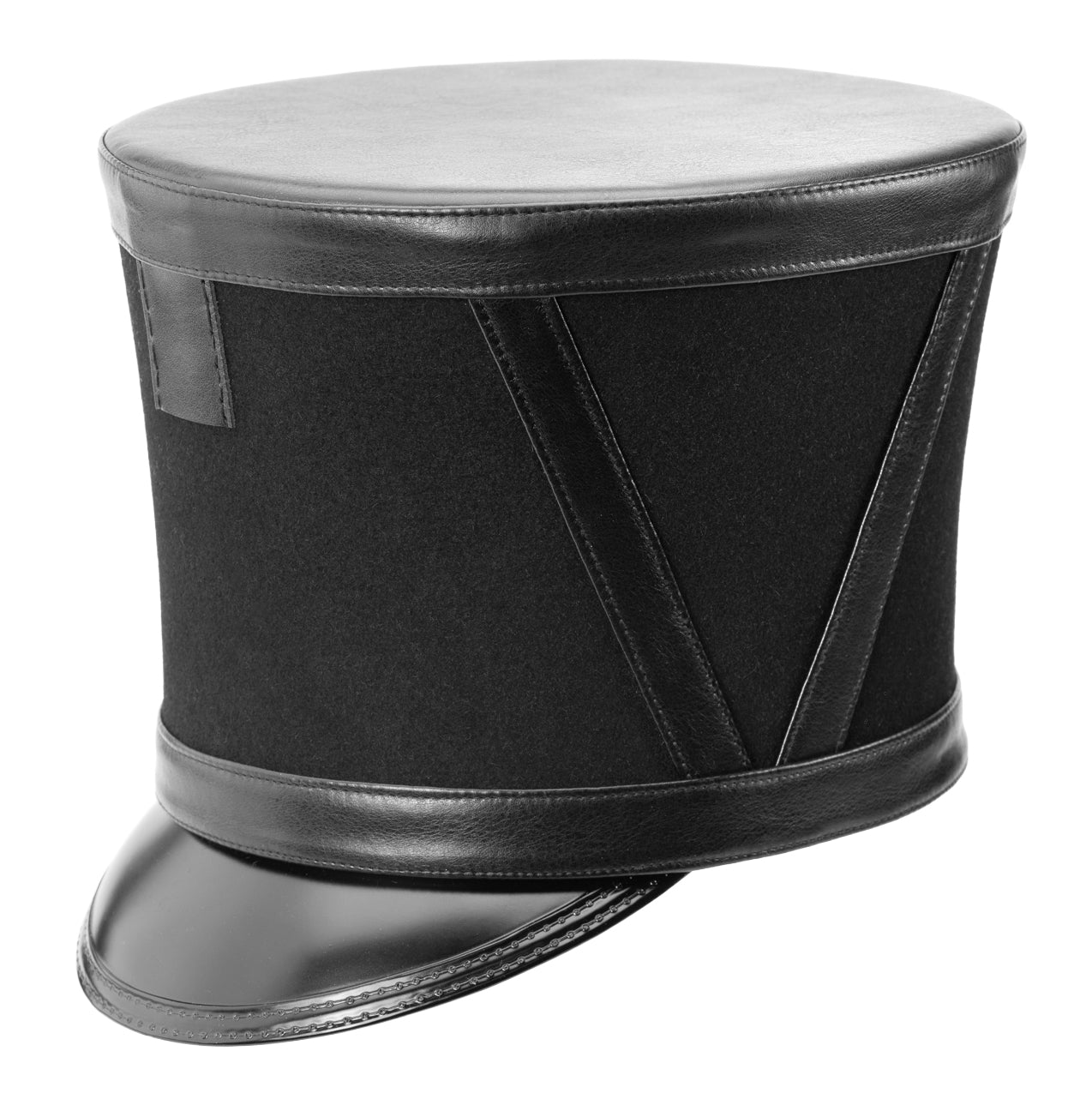
shako
The shako – where military rigor meets craftsmanship
Once military headgear with a conical silhouette, tashkos were worn by the army and police from the beginning of the 18th century until about 1920 .
Primarily due to their impressive military effect, many different shako (chako) styles remain an indispensable part of many traditional costume and heritage associations today.
Shakos are more than just part of historical uniforms – they are an expression of discipline, functionality, and proud military tradition . In our workshop, we are dedicated to the authentic and high-quality production of shakos for reenactment, theater, museums, and collectors . We craft these unique head coverings with great care, using original patterns.
We also manufacture all shakos to head measurements and can adapt the colors to club colors .
Other possible adjustments include:
- Pull lining, chin strap, scale chains
- Different spring holders (case or bag).
- Special colors of the individual elements of the shako
- Special emblems and badges

What is a shako?
A shako (also spelled shako or czako) is a tall, cylindrical helmet with a slightly forward-sloping or flared brim, originally made of felt, but later also of leather or sheet metal. It was introduced into numerous European armies from the late 18th century onwards and quickly became one of the most distinctive military helmets of the 19th century.
Its distinctive shape, often decorated with emblems, plumes, cords or rosettes , made it not only functional but also visually representative – a symbol of rank, unity and demonstration of power.
Although the shako was originally intended as a protective helmet, in reality it offered little protection against bullets or shrapnel. With the advent of modern firearms, especially rifles with long range and firepower, it became clear that the shako was more of a decorative item than a genuine protective helmet .
The shako today, where is it still used?
Today, the shako (also spelled shako) is no longer worn as standard military equipment , but it has survived in certain areas as a traditional item, part of a uniform, or as a prop . Here are the main groups that still wear shakos today:
Military tradition and ceremonial units
-
Guard units or honor guards in various countries wear historical uniforms, often including a shako, on special occasions.
-
Examples:
-
The Norwegian Army Guard wears black shakos with feather plumes at state occasions.
-
Some units in France or Italy use it for parade purposes.
-
Police and gendarmerie units
-
In some European countries, the shako is still part of the representative police uniform .
-
Austria : The police wore shakos until the 1970s; the Vienna Federal Police still wear them ceremonially today.
-
Germany : The shako was long part of the police uniform (especially in Prussia) , but today it is only shown on traditional or historical occasions.
-
Carnival, reenactment and historical drama
-
In historical reenactments (e.g. Napoleonic era, Biedermeier, Vormärz) the shako is worn as an authentic piece of equipment.
-
In carnival clubs or parades , shakos are part of imaginative or historical costumes.
Uniformed traditional clubs
-
In many regions there are rifle clubs, civic associations or traditional societies that wear Prussian or Napoleonic-inspired uniforms – often with a shako.
-
These serve the cultural preservation of military history and customs .